Abdul Khaliq Hazara (Dari: عبدالخالق هزاره), (1916 — December 18, 1933) was an Afghan Hazara high school student who assassinated the King of Afghanistan, Mohammad Nadir Shah, on 8 November 1933, during an award distribution ceremony. He was quickly arrested, tortured, and later executed by quartering along with most of his relatives.
The motive for the assassination was reportedly in revenge for Nadir Shah's unjust taxes and extrajudicial killings of Hazaras, and for the killing of Ghulam Nabi Charkhi who was a former Afghanistan ambassador to Moscow who took part in the Afghan civil war of 1928-29 as a supporter of the previous ruler of Afghanistan, the reform-minded Amanullah Khan.
Life
Khaliq was born in 1916 in the Chindawol area of Kabul, Afghanistan. He was a student at Nejat High School.
Khaliq belonged to the Hazara tribe from central Afghanistan called Hazarajat. Hazaras were discriminated against as a result of a rebellion that was brutally crushed by King Abdur Rahman, Nadir Khan's father. Growing up as a Hazara in a discriminatory environment of Kabul, Abdul Khaliq Hazara had vowed to avenge the treatment of Hazaras by assasinating Nadir Khan, who was ethnically pashtun and a descendent of King Abdur Rahman.
Assassination of the King
Abdul Khaliq plotted to assassinate Nadir Shah. The first attempt was at the Independence Day gathering at the Id Gah Mosque, but Abdul Khaliq did not attend. A few months later, opportunity arose when Nadir Shah invited athletes of his high school to the palace to distribute medals for their achievements. Abdul Khaliq was one of the attendees and saw no security units at the gates. Abdul Khaliq rode his bike back to the Pamir Cinema area and brought with him a gun that belonged to his friend Ishaq Sherdel.
Abdul Khaliq returned with a Nagant M1895 loaded with 6 bullets of 7.62×38mmR wrapped in a handkerchief hidden in his pocket. He stood behind Ishaq Sherdel and Mahmood. The national flag was lowered and Nadir Shah entered the rose garden. He examined the medals table and walked over towards the students. Abdul Khaliq reached into his pocket and pulled out the gun, aimed at Nadir Shah and pulled the trigger. The first bullet hit Nadir in his mouth, the second shot pierced Nadir's heart, and the third shot cut through one of Nadir's lungs. The guards rushed towards Abdul Khaliq and a fourth bullet hit a guard. Abdul Khaliq then threw the gun as the guards chased him.
Shah Mahmood ordered the arrest of over 400 "Nejat High school" students and by executive decree ordered all students to be put to death. A soldier in the national guard convinced Mahmood that the students were innocent, and they were then released.
Execution
Abdul Khaliq was imprisoned and under torture gave up the names of his accomplices. Abdul Khaliq was given a trial in which he named all his friends and family members as accomplices. The strength of these claims has since been questioned by the lone surviving member of Abdul Khaliq's family. He was eventually sentenced to death along with 16 others. The majority of Abdul Khaliq's family were taken to the Deh Mazang prison.
Sixteen nooses were prepared at the execution site. Abdul Khaliq was brought over and was asked with which one of his fingers he squeezed the trigger. He lifted his index finger, and immediately that finger was cut off. He was then questioned which eye he used to aim, upon which they immediately gouged out that eye with a dagger. The authorities eventually tortured Abdul Khaliq to death instead of hanging him. Security officers tortured Abdul Khaliq by cutting his tongue and gouging his eyes and soldiers killed him with bayonets while his family and friends were forced to watch.
Abdul Khaliq Hazara is considered to be a martyr by Hazaras and the Solidarity Party of Afghanistan.
See also
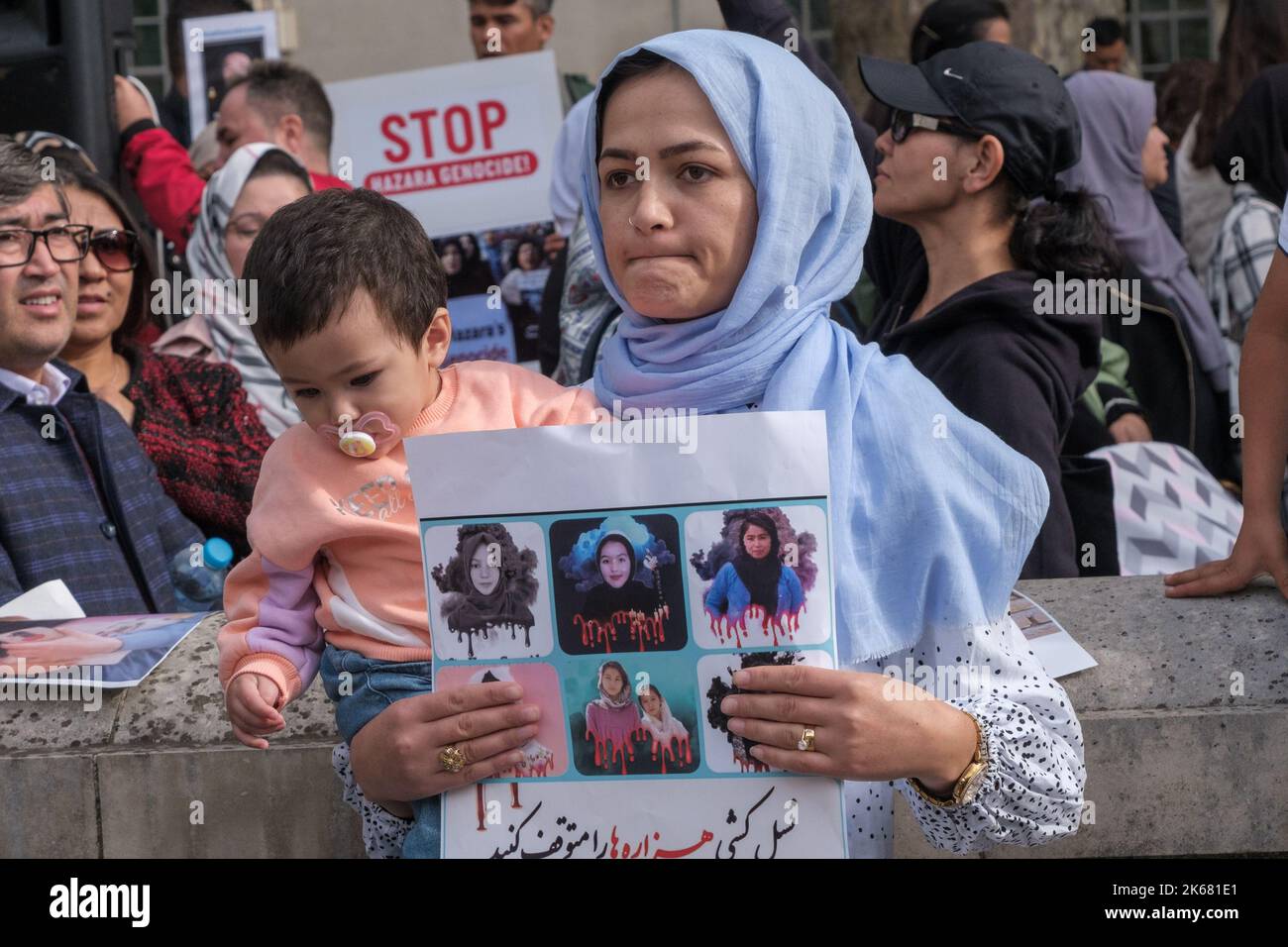
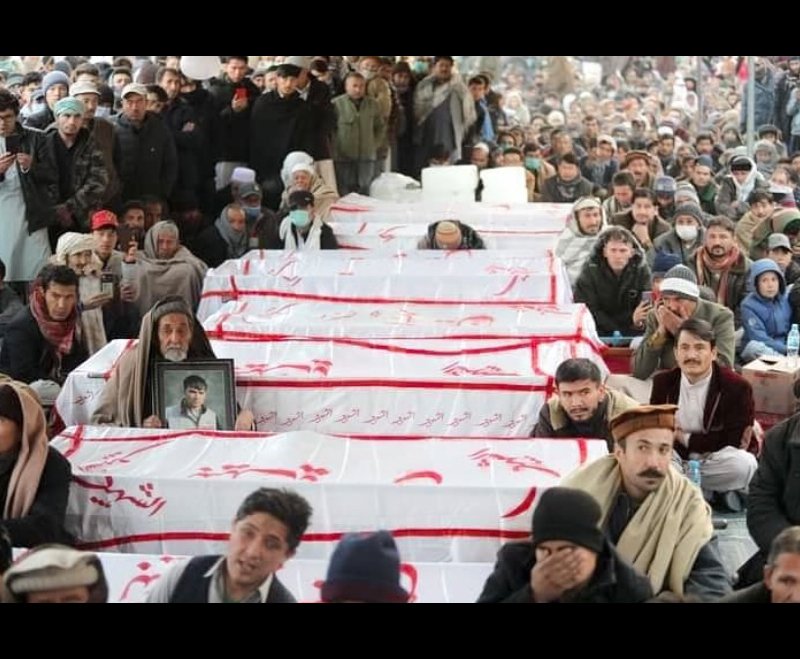
- Hazara Genocide
- Assassination
- List of Hazara people
References